Ohio government bids are spread across four places: OhioBuys for state agencies, ODOT’s letting system for roads and bridges, hundreds of city, county and school district purchasing pages, and a large federal buying presence led by the Defense Logistics Agency in Columbus. Most guides cover only the first one. This guide walks all four, gives you the 2026 dollar thresholds that decide when a job must be formally bid, and shows what our own feed says about where Ohio’s open work actually comes from, so you can spend your registration time where the bids are.
Ohio government bids: the four places they live
Ohio procurement is not one system. It is four separate channels, each with its own registration and its own rules. Knowing which one fits your business is most of the work.
OhioBuys is the state’s online purchasing system, run by the Department of Administrative Services (DAS). State agencies post solicitations there, and you can browse open OhioBuys solicitations without logging in. ODOT (the Ohio Department of Transportation) runs its own construction lettings with electronic bidding through Bid Express. Local governments (cities, counties, townships, school districts, universities) each buy on their own. And federal agencies based in Ohio post on SAM.gov like everywhere else, with one very large buyer in Columbus.
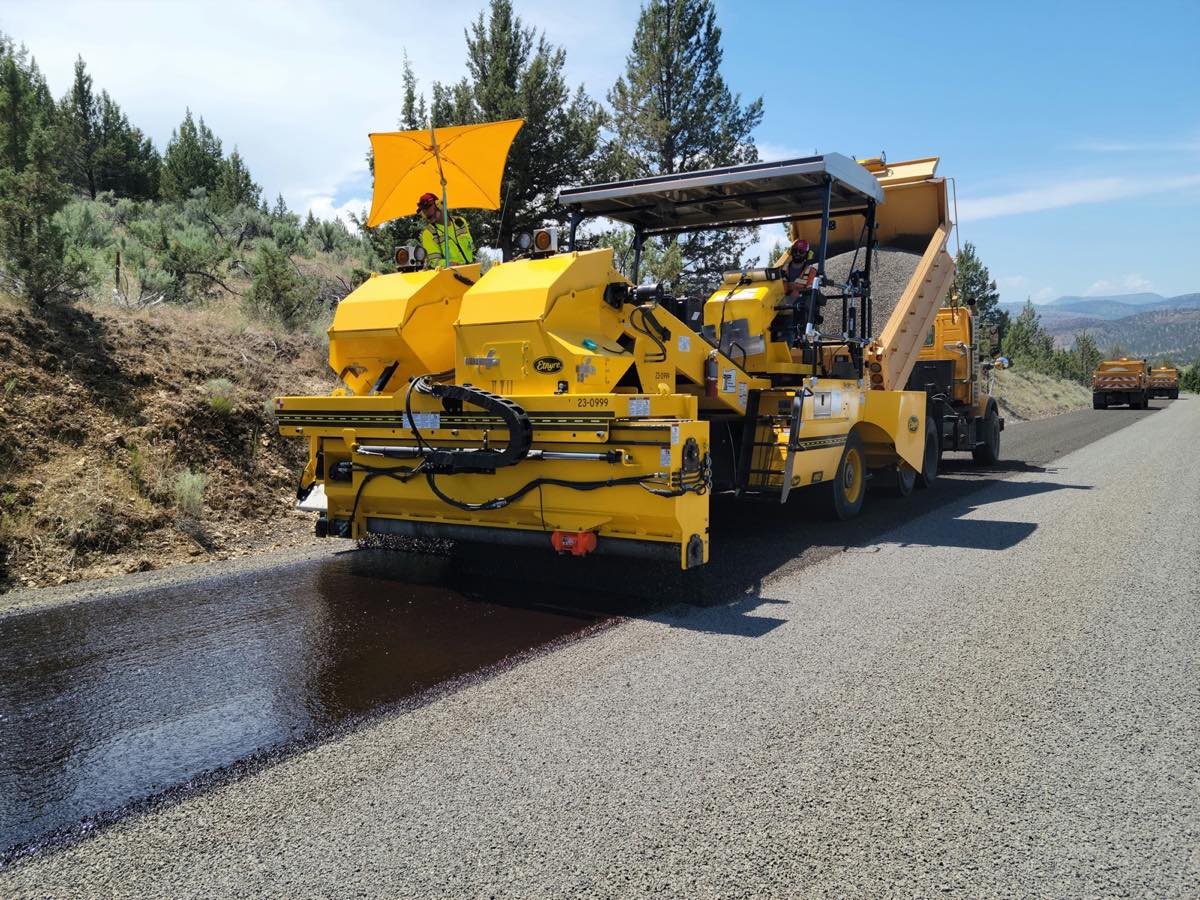
Where Ohio government work is posted
| Channel | Who buys | Where to find it | Registration |
|---|---|---|---|
| OhioBuys | State agencies | ohiobuys.ohio.gov | OHID + Bidder Registration Request |
| ODOT lettings | Road and bridge construction | ODOT contracts site + Bid Express | ODOT prequalification required |
| Local portals | Cities, counties, schools | Each entity’s purchasing page | Separate vendor list for each |
| Federal (in Ohio) | DLA, Air Force, VA, NASA | SAM.gov, plus DIBBS for DLA | SAM.gov registration |

That split surprised us. On September 28, 2026, our feed held 3,410 open Ohio listings, more than any other state. But 2,251 of them were federal, and 98% of those came from the Defense Logistics Agency. Another roughly 578 were the same kind of DLA parts notices re-posted on Ohio’s BidNet feed. The state and local layer, the work most small Ohio firms picture when they say “government bids,” was about 580 open opportunities. Both markets are real. They just need different registrations.
Pro Tip: Before you register anywhere, decide which of the four channels matches what you sell. A paving contractor lives in ODOT and county work. A parts distributor may find more in a week of DLA quotes than in a year of state bids.
How do you register to bid on Ohio state contracts?
To bid on state agency work, you register in OhioBuys with an OHID account. According to the DAS bidder and supplier guide (updated August 2026), a company that has never done business with the state starts as a “Bidder.” The steps:
- Create an OHID. OHID is Ohio’s single sign-on account. Every person at your company who will use OhioBuys needs their own.
- Submit a Bidder Registration Request in OhioBuys. It is a short form. Whoever submits it becomes your company’s Supplier Administrator and can add colleagues later.
- Pick your commodity categories carefully. The categories you choose decide which solicitations you get notified about. Too broad and you drown; too narrow and you miss work. Our multi-state registration guide covers how to choose.
- Set up payment before you win. Supplier payment and banking details live in a separate system, OhioPays. Getting it done early avoids a slow first invoice.
- Browse the public solicitation list weekly. You do not need to log in to see open OhioBuys bids, so you can judge real volume in your category before investing more time.
- Check certification eligibility. If you qualify for Ohio’s MBE or EDGE programs (covered below), apply early, because some state purchases are set aside for certified firms.
If you already hold a federal registration, note that none of this carries over. SAM.gov and OhioBuys are separate systems, just as SAM.gov registration is separate from every other state.
Pro Tip: Register in OhioBuys even if you mostly chase local work. Many Ohio cities, counties and schools can buy from state contracts through the DAS Cooperative Purchasing Program, so a state contract can reach local buyers too.
What are the bidding thresholds in Ohio for 2026?
Ohio sets separate thresholds for state agencies and local governments. Below the threshold, buyers can use simpler methods like quotes. Above it, the job must be formally, competitively bid.
| Buyer | 2026 threshold | Source |
|---|---|---|
| State agencies | $50,000 and up needs competitive selection | ORC 125.05, 127.16 |
| Cities (municipalities) | Formal bidding above $79,568 | ORC 735.05 + 9.17 |
| Counties | Formal bidding above $79,568 | ORC 307.86 + 9.17 |
| School districts | Formal bidding above $79,568 | ORC 3313.46 + 9.17 |
| Townships | Formal bidding above $79,568 | ORC 9.17 |
The local number moves every year. Ohio Revised Code 9.17 set it at $75,000 through 2024 and raises it 3% a year after that, so it was $77,250 in 2025 and is $79,568 in 2026. The practical point for a small business: a lot of local work sits below that line, where buyers can call a few vendors for quotes instead of advertising. Being on the vendor list, and known to the buyer, is how you get those calls.
Where do ODOT and Ohio road contracts get posted?
ODOT construction is let through the ODOT contracts site, with bids submitted electronically through Bid Express, which ODOT has used since 2004. Lettings run on a regular schedule. The September 17, 2026 letting, for example, included a $3.35 million resurfacing job on US 250 in Ashland County.
The rule that trips up newcomers: you must be prequalified before you bid. Under Ohio Revised Code 5525.02, an ODOT contract awarded to a bidder who is not prequalified is void. ODOT asks new bidders to apply well ahead of the bid date. Engineering and professional-services firms go through a separate route: prequalification in ODOT’s consultant system, then Letters of Interest in response to ODOT’s posted selection notices.
Road work is also the biggest slice of Ohio’s local market in our data. Of the roughly 580 open state and local listings, about 130 were road, bridge and paving jobs, and 99 carried ODOT’s county, route and section project codes. If you do paving, striping, guardrail or bridge work, ODOT prequalification is the first investment to make.
How do you find local Ohio bids (cities, counties, schools)?
Local governments are the largest part of Ohio’s buying and the most scattered. Ohio has 88 counties, and every city, county, township, school district and public university buys independently. There is no single state list for them.
What we recommend, the same approach as our guide to finding local government RFPs:
- Start with your home city and county. Cleveland, for example, asks vendors to send a pre-registration form and a W-9 to its Division of Purchases & Supplies. Cincinnati uses a Vendor Self Service portal for bids and a separate system for RFPs. Columbus runs its own vendor services portal.
- Add the three to five largest buyers within driving distance. Big school districts, the county engineer’s office and nearby universities post steady, repeatable work.
- Know what BidNet is and is not. Many Ohio agencies post through BidNet Direct’s Ohio purchasing group. The free plan covers bids from member agencies; seeing all state and local bids in one state is a paid add-on (listed at $599 a year for one state when we checked). Our BidNet Direct review covers the tradeoffs.
- Watch for mirrored federal notices. Much of the “statewide and federal” list on Ohio aggregators is DLA parts notices, which you would quote on DIBBS, not through the local agency.
“The state portal is the front door, but most of Ohio’s buying happens in county engineers’ offices, school business offices and city purchasing departments that never touch OhioBuys.” — the pattern we see in Ohio’s local listings
What federal contracts are available in Ohio?
Ohio is one of the country’s biggest federal buying hubs, mostly because of the Defense Logistics Agency’s Columbus site. DLA merged its Land and Maritime and Aviation commands into DLA Weapons Support in July 2026, headquartered at Defense Supply Center Columbus. It buys spare parts and supplies for military weapon systems, and much of that buying runs through DIBBS, DLA’s own bid board.
Our feed shows what that looks like for a small supplier:
| Federal Ohio listings (Sept 28, 2026) | Count |
|---|---|
| Open federal notices from Ohio offices | 2,251 |
| From the Defense Logistics Agency | 2,199 (98%) |
| Set aside for small business (any type) | 1,225 (54%) |
| Due within 14 days | 2,215 |
These are short-fuse quotes, nearly all closing within two weeks, and more than half are reserved for small businesses. If you manufacture or distribute parts, DIBBS is worth an hour of your time. You need an active SAM.gov registration first. Beyond DLA, Ohio also hosts Wright-Patterson Air Force Base near Dayton (home of Air Force Materiel Command) and NASA’s Glenn Research Center in Cleveland, both of which post on SAM.gov.
Pro Tip: DLA quotes turn over fast. Checking once a week means most of what you see has already closed. A daily check, or a daily filtered email, is the minimum for this market.
Does Ohio have small business or minority set-asides?
Yes. Ohio runs two state programs. Under Ohio Revised Code 125.081, state agencies set aside about 15% of eligible purchases for certified Minority Business Enterprises (MBE). EDGE (Encouraging Diversity, Growth and Equity) supports small, socially and economically disadvantaged businesses and carries a 5% participation goal. The Ohio Department of Development handles certification for both.
The programs are used. According to the state’s 2023 annual report, MBE set-aside purchasing reached 17.92% and EDGE participation reached 6.38% that fiscal year, both above goal. If you qualify, certification narrows your competition on state work, much like federal set-asides do.
Key takeaways
| Point | Details |
|---|---|
| Four channels, four registrations | OhioBuys (state), ODOT (roads), local portals, SAM.gov/DIBBS (federal) |
| OhioBuys starts with OHID | Create an OHID, then submit a Bidder Registration Request; payment setup is separate in OhioPays |
| 2026 local threshold is $79,568 | Above it, cities, counties, townships and schools must formally bid; it rises 3% a year |
| ODOT requires prequalification | A contract to an unqualified bidder is void under ORC 5525.02 |
| Most “Ohio” volume is federal | 2,251 of 3,410 open listings were federal, 98% DLA, 54% small-business set-asides |
What most Ohio bidders get wrong
We think the biggest mistake is treating “Ohio government bids” as one market. When we split our Ohio feed by buyer, two-thirds was federal parts buying out of Columbus, and the state and local work that most Ohio contractors want was a much smaller, far more scattered slice. A landscaper who registers on OhioBuys and stops there sees a thin list and concludes government work is not worth it. A parts supplier who never heard of DIBBS misses one of the busiest federal buyers in the country, sitting in their own state.
The fix is not more portals. It is the right two or three for what you sell, checked often enough to catch short deadlines. For most small Ohio firms that means OhioBuys plus their home county and city, and ODOT or DIBBS if their trade fits.
— The RFPHawk Team
RFPHawk for Ohio bidders
Ohio’s split is exactly the problem a single feed solves. RFPHawk pulls Ohio state and local bids and federal notices into one list, so you can see OhioBuys-type state work, county road jobs and DLA quotes side by side and filter to your trade. You can browse open Ohio opportunities without an account, see current activity on our Ohio state page, and create a free account with no card. Filtered daily email alerts and match scoring are part of Pro, which comes with a 14-day trial.
Frequently asked questions
Where are Ohio government bids posted?
State agency solicitations are posted on OhioBuys, the state’s online purchasing system run by the Department of Administrative Services. ODOT posts road and bridge work through its own letting process. Cities, counties and school districts post on their own purchasing pages.
How do I register as a vendor with the State of Ohio?
Create an OHID account, then submit a Bidder Registration Request in OhioBuys. The person who submits it becomes your company’s Supplier Administrator. Payment details for winning suppliers are handled separately in OhioPays, so set that up before you need it.
What is the competitive bidding threshold in Ohio?
For cities, counties, townships and school districts, contracts above $79,568 in 2026 must be formally bid. The figure is set by Ohio Revised Code 9.17 and rises 3% a year. State agencies must use competitive selection at $50,000 and up.
Do I need to be prequalified to bid on ODOT projects?
Yes, for construction. Ohio law voids an ODOT contract awarded to a bidder who is not prequalified, and new contractors should apply well ahead of the bid date. Engineering and other consultants prequalify separately through ODOT’s consultant system.
What are Ohio’s MBE and EDGE programs?
They are state programs for small and disadvantaged businesses. Ohio law directs state agencies to set aside about 15% of eligible purchases for certified minority business enterprises. EDGE carries a 5% participation goal. The Ohio Department of Development handles certification.
Recommended
- How to Bid on State Contracts: the general primer for any state
- How to Register on State Procurement Portals: the multi-state registration playbook
- How to Find Texas Government Bids: how another big state compares
Put RFPHawk to work on your pipeline.
Federal SAM.gov plus a growing list of state portals, refreshed daily and scored against your profile so you see the bids worth pursuing first.
Start free — no credit card